
How much should I spend getting my house ready to sell??

How Much Should I Spend Getting My House Ready to Sell?
If you're thinking about selling your home, there's a point where the pre-listing to-do list can start getting expensive.
Landscaping.
Light fixtures.
Maybe the kitchen.
Maybe the bathrooms.
Maybe that roof you've been wondering about.
And suddenly you're looking at $10,000, $25,000 or even $50,000 worth of projects before you've put a FOR SALE sign in the yard.
So how much should you actually spend getting your house ready to sell?
My answer:
Enough to improve your position with buyers but not so much that you're renovating away your profit.
For homeowners in Centennial, Greenwood Village, Lone Tree and throughout the South Denver Metro, I don't believe in giving every seller the same preparation budget.
Instead, I want to answer three questions:
What does your home need?
What do buyers in your price range expect?
And which improvements are actually likely to give you something back?
Let's start there.
There Is No Magic Pre-Sale Budget
You'll find plenty of rules online telling homeowners to spend a certain percentage of their home's value getting it ready.
Those can be useful as a starting point.
But I wouldn't automatically spend 1%, 2% or 3% of your home's value simply because a formula says you should.
Think about a $900,000 home.
Two percent is $18,000.
Does that mean you need to find $18,000 worth of projects?
Absolutely not.
If your home is clean, well maintained and already competes nicely with other homes in your neighborhood, I'd much rather you keep that money.
On the other hand, there may be situations where one larger repair genuinely changes the property's marketability.
The budget should follow the strategy.
Not the other way around.
Start With $0
Before spending anything, I'd start with the things that cost little or nothing.
Declutter.
Remove excess furniture.
Clean out closets.
Clear countertops.
Wash windows.
Organize the garage.
Remove personal clutter.
Open the blinds.
Clean up the yard.
You'd be surprised how different a home can look before you've spent much money at all.
This also gives us a much better picture of what actually needs attention.
Sometimes homeowners think a room needs new flooring when what it really needs is less furniture, better lighting and a deep clean.
Your First Dollars Should Usually Go Toward Presentation
Once the free work is done, I'd generally look at the inexpensive, high-visibility items.
Things like:
-
Professional cleaning
-
Carpet cleaning
-
Paint touch-ups
-
Minor drywall repair
-
Burned-out bulbs
-
Dated or broken light fixtures
-
Loose handles
-
Dripping faucets
-
Damaged caulk
-
Broken outlet covers
-
Basic landscaping
-
Power washing
-
Front-door cleanup
None of this sounds particularly exciting.
That's the point.
Getting a house ready to sell isn't HGTV.
We're not trying to create a dramatic before-and-after reveal.
We're trying to make buyers walk in and think:
“This house has been cared for.”
Why Small Repairs Matter So Much
A buyer doesn't necessarily know what repairs cost.
They know how repairs make them feel.
A dripping faucet might be inexpensive.
A loose railing might be easy to repair.
A door that doesn't close correctly might take 20 minutes to adjust.
But if a buyer sees six or seven little things during a showing, they may start wondering:
What else hasn't been maintained?
That's why I'd rather spend a few hundred dollars removing obvious objections than spend thousands making a perfectly functional room trendier.
What If I Have $5,000 to Spend?
Every home is different, but I'd generally start here:
1. Cleaning and decluttering
Get the house looking as good as it possibly can in its current condition.
2. Small repairs
Take care of the little things buyers will notice immediately.
3. Paint where needed
Not automatically the entire house.
Focus on damaged, dark, heavily personalized or tired-looking areas.
4. Flooring where needed
Clean it first.
Replace it when condition or odor is creating a real objection.
5. Curb appeal
Trim, clean, weed, mulch and make the entrance feel welcoming.
That's a much better starting point than deciding you need new countertops because you have money left in the budget.
What If I Have $10,000 to $20,000?
This is where I'd become even more careful.
Having the money available doesn't mean we should spend it.
At this level, we need to start looking closely at comparable homes.
Let's say your Centennial home could sell for around $750,000 in its current condition.
We look at recently sold homes with similar:
-
Location
-
Size
-
Floor plan
-
Lot
-
Age
-
Features
Then we compare the updated ones with the less-updated ones.
If spending $15,000 could reasonably help close a meaningful gap between your home and the competition, we can evaluate it.
But if buyers are already paying strong prices for homes in your condition?
Keep the $15,000.
What About $30,000, $50,000 or More?
This is where I really want homeowners to stop before starting projects.
At that point, we're no longer talking about basic preparation.
We're probably talking about renovation.
Maybe:
-
New kitchen
-
New bathrooms
-
Extensive flooring
-
Windows
-
Roof
-
Major landscaping
-
Multiple systems
Could those things make your home worth more?
Of course.
But the question isn't:
Will my home be worth more afterward?
The question is:
Will it be worth enough more to justify the cost, time and risk?
Those are very different things.
Think About NET, Not Just Sale Price
Here's a simplified example.
Imagine your home might sell today for:
$800,000
You spend:
$40,000
After the improvements, perhaps it sells for:
$830,000
Did you win?
No.
You spent $40,000 to potentially create $30,000 in additional sale price.
And that's before considering:
-
Additional mortgage payments
-
Property taxes
-
Utilities
-
Insurance
-
Contractor overruns
-
Delays
-
Your time
-
Your stress
A higher sale price doesn't automatically mean a better financial outcome.
Your net matters more.
The One Question I Want Answered Before a Big Project
Before spending serious money, I want to know:
What does this project solve?
Does it remove a major buyer objection?
Does it expand our buyer pool?
Does it help the property compete with recently sold homes?
Could it prevent a financing or insurance issue?
Does it dramatically improve the home's online presentation?
Or are we doing it because someone said:
“You should update that before you sell.”
That's not enough for me.
Should I Replace the Carpet?
We've already covered this one in detail.
If it's clean and in good condition?
Maybe not.
If it's badly stained, damaged, matted or smells?
Now it could be worth spending money.
The same logic applies throughout the house.
Fix the problem—not automatically the entire category.
Should I Paint?
Again:
Not automatically.
A few tired rooms may need paint.
Your entire house may not.
I'd rather spend $1,500 strategically than $7,000 simply because sellers are “supposed” to paint before listing.
Should I Remodel the Kitchen?
This is where sellers can overspend very quickly.
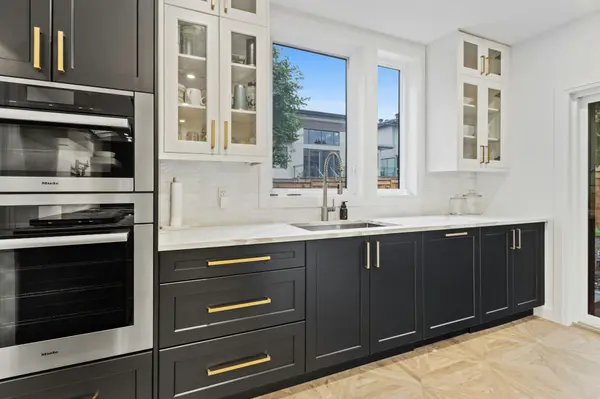
A dated but functional kitchen may benefit from:
-
Hardware
-
Lighting
-
Paint
-
Cabinet touch-ups
-
A new faucet
-
Deep cleaning
It doesn't automatically need to be gutted.
Remember:
We're selling a house. We're not designing a kitchen for someone we've never met.
What About Major Repairs?
This is a different category.
If we're dealing with:
-
Roof problems
-
Structural issues
-
Electrical concerns
-
Plumbing problems
-
Water intrusion
-
HVAC issues
-
Sewer problems
we need to evaluate those individually.
Sometimes fixing the issue makes sense.
Sometimes we price for it.
Sometimes we disclose it and let the buyer decide.
And sometimes a repair can dramatically expand the buyer pool because it removes an insurance, financing or confidence issue.
That's why a $15,000 roof and a $15,000 cosmetic renovation shouldn't automatically be treated the same way.
Your Neighborhood Matters
This is where generic online advice can become dangerous.
Imagine two homes.
One is a $700,000 home in Centennial.
The other is a $2 million home in Greenwood Village.
The buyers may have completely different expectations.
And even within Centennial, expectations can vary tremendously depending on the neighborhood, age of the home and price point.
The goal isn't to make your house the nicest home on Zillow.
The goal is to make it competitive within its own market.
Don't Over-Improve the Neighborhood
This is one of the biggest traps.
Suppose updated homes in your neighborhood are selling around $850,000.
Your home is worth roughly $800,000 today.
Spending $100,000 doesn't magically make it a $900,000 house.
The neighborhood and comparable sales still matter.
There's usually a ceiling.
Before spending serious money, we need to understand where that ceiling is.
My Pre-Sale Spending Test
Before spending money, I'd ask six questions:
1. What is the home worth in its current condition?
We need a baseline.
2. What are updated homes actually selling for?
Not listing for.
Selling for.
3. What will the project really cost?
Get actual estimates.
4. How much value could it realistically create?
Use comparable sales rather than guessing.
5. How long will it delay the sale?
Time costs money too.
6. Will buyers actually care?
This may be the most important question of all.
My Three-Bucket Strategy
When I walk through a home before selling, I like putting potential projects into three buckets.
SPEND HERE
Items that are inexpensive relative to the difference they could make.
Cleaning.
Small repairs.
Targeted paint.
Curb appeal.
Presentation.
LET'S RUN THE NUMBERS
Carpet.
Flooring.
Larger paint projects.
Countertops.
Appliances.
Roof.
Windows.
Major systems.
These require more context.
KEEP YOUR MONEY
Major renovations with questionable return.
Highly personalized upgrades.
Projects buyers may immediately change anyway.
Improvements that push the home beyond neighborhood expectations.
This is often my favorite bucket.
So, How Much Should You Spend Getting Your House Ready to Sell?
Here's my answer:
As little as necessary to get the best reasonable outcome.
For one homeowner, that might be $1,000.
For another, $5,000.
For another, $15,000.
And occasionally there may be a larger project that makes financial sense.
But I don't want to begin with:
“You should spend $20,000 getting this house ready.”
I want to begin with:
“Let's see what buyers will actually care about.”
That's what this entire series has been about.
Should I stay, renovate or move?
What improvements actually add value?
What should I fix?
Should I replace the carpet?
Should I paint?
Should I remodel the kitchen?
Should I get a pre-listing inspection?
Should I sell as-is or fix it up?
And finally:
How much should I actually spend?
If you own a home in Centennial, Greenwood Village, Lone Tree or elsewhere in the South Denver Metro and you're thinking about selling, I'd much rather walk through your home before you start spending money.
We can compare your home with the competition and build a simple plan:
Do this.
Maybe do this.
Don't touch that.
Sometimes the best advice I can give a homeowner is helping them spend money wisely.
And sometimes it's helping them not spend it at all.
Stay. Renovate. Move.
The right decision starts with understanding your options.
Devin @ The W Real Estate Group
Categories
Recent Posts





GET MORE INFORMATION