
Should I Sell My House As-Is or Fix It Up? | Centennial CO
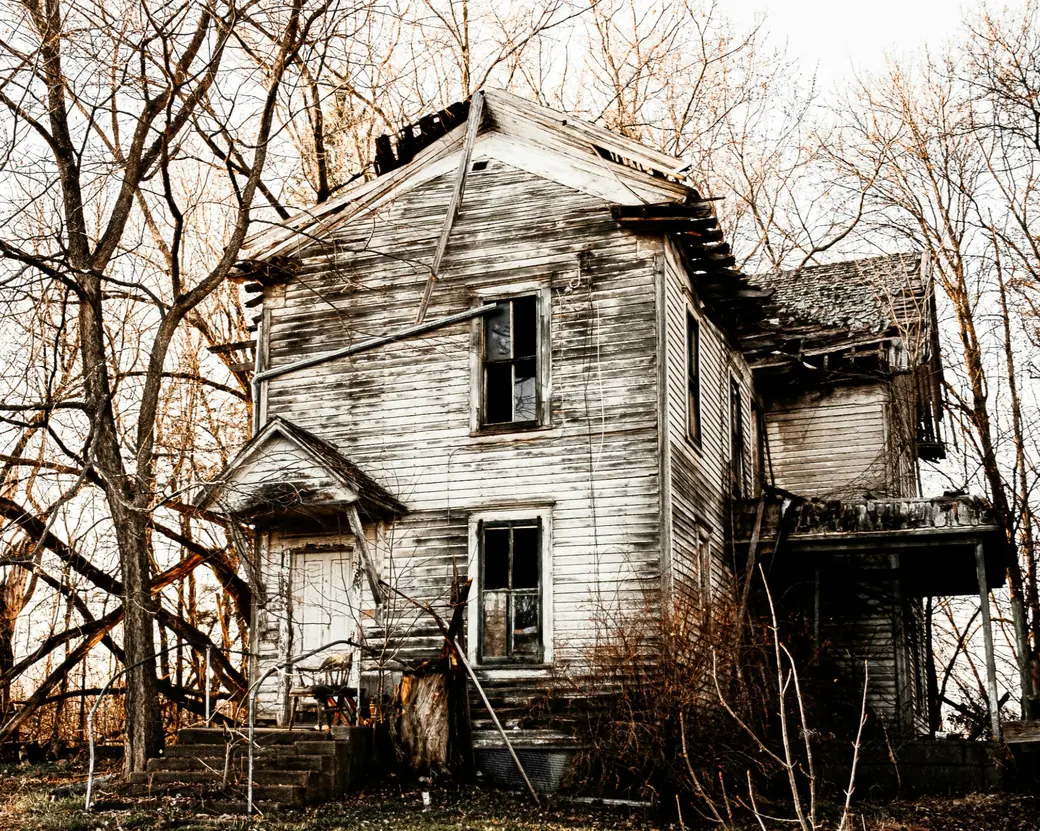
Should I Sell My House As-Is or Fix It Up First?
If you're thinking about selling your home but looking around at everything that could use some attention, you may be wondering:
Should I fix all of this before I sell, or just sell the house as-is?
Maybe the carpet is worn.
The kitchen is dated.
There are a few things you've been meaning to repair for years.
Or maybe you're dealing with a parent's or family member's home that hasn't been updated in decades.
The thought of coordinating painters, flooring companies, contractors and renovations before you can even put the house on the market can feel overwhelming.
So can you simply sell it the way it is?
Absolutely.
But that doesn't automatically mean you should.
For homeowners in Centennial, Greenwood Village, Lone Tree and throughout the South Denver Metro, I think there's a better way to make this decision:
Don't ask what you could fix. Ask which improvements are actually likely to improve your outcome.
Those are two very different questions.
First, What Does Selling “As-Is” Actually Mean?
This is commonly misunderstood.
Generally speaking, selling a home as-is means you're selling the property in its current condition and aren't planning to make repairs.
But it does not mean:
-
Buyers can't inspect the home
-
Known material defects can simply be ignored
-
Buyers won't consider repair costs when making an offer
-
The condition of the home won't affect its value
And in Colorado, selling as-is does not simply erase a seller's disclosure obligations.
That's important.
“As-is” is a selling strategy.
It isn't a magic phrase that makes the condition of the property irrelevant.
The Real Question Is What You'll NET
Let's say your home could potentially sell for $800,000 after you put $40,000 into it.
Or you could sell it in its current condition for $775,000.
Which sounds better?
The $800,000 sale?
Not necessarily.
You spent $40,000 to potentially make another $25,000.
And we haven't even considered:
-
Contractor costs
-
Carrying costs
-
Additional mortgage payments
-
Taxes
-
Insurance
-
Utilities
-
Your time
-
The risk of the project going over budget
That's why I don't want sellers automatically chasing the highest possible sale price.
I care much more about:
What puts the most money in your pocket with a level of time, risk and effort you're comfortable with?
That's the number that matters.
There's Actually a Third Option
Homeowners often think they have two choices:
Option 1: Fix everything.
Or:
Option 2: Sell completely as-is.
But there's a third option that I frequently prefer:
Option 3: Fix a few things strategically.
This is where we identify the handful of improvements most likely to change how buyers perceive the home.
Maybe we don't remodel the kitchen.
We update the lighting and hardware instead.
Maybe we don't replace every floor.
We replace the badly stained carpet upstairs.
Maybe we don't repaint the entire house.
We paint the dark living room and touch up the damaged areas.
Maybe we don't renovate the exterior.
We trim the landscaping, clean everything up and improve the front entrance.
We're not trying to make the house perfect.
We're trying to remove the objections that matter.
When Selling As-Is Can Make a Lot of Sense
There are absolutely situations where I would consider selling without doing much work.
The Home Needs Significant Renovation
If a property needs:
-
Kitchen
-
Bathrooms
-
Flooring
-
Roof
-
Windows
-
HVAC
-
Electrical
-
Plumbing
we need to be careful.
Once you're talking about a major renovation, you may be better off pricing the home appropriately and letting the next owner make those decisions.
Especially because they'll get to choose the finishes.
It's an Inherited Home
This is a big one.
Sometimes a family inherits a home that's been owned for 30, 40 or even 50 years.
The house may be full of belongings.
It may need updating.
And the family may live out of state.
Could we renovate it?
Sure.
But that doesn't mean managing a six-month renovation from another state is the best financial—or emotional—decision.
Sometimes the better option is to:
Clean it out.
Make a handful of strategic improvements.
Price it appropriately.
And move forward.
You Need to Sell Quickly
Time has value.
Maybe you've already purchased another home.
Maybe you're relocating.
Maybe you're helping a parent move.
Maybe maintaining two properties simply doesn't make sense.
A renovation that theoretically produces another $20,000 isn't necessarily a win if it takes four months and costs you thousands in carrying costs.
Your timeline belongs in the equation.
You Don't Have the Cash for Major Repairs
You shouldn't automatically drain savings just to prepare a house for sale.
There may be other ways to handle the property's condition.
Depending on the situation, we can potentially consider:
-
Pricing for condition
-
Limited repairs
-
Buyer concessions
-
Contractor estimates
-
Strategic improvements only
There isn't one universal solution.
When I Would Probably Fix Some Things First
On the other hand, there are situations where doing absolutely nothing can cost you.
Small Problems Are Making the House Feel Neglected
This is one of the easiest problems to solve.
Imagine a buyer walking through and seeing:
A loose doorknob.
A dripping faucet.
Burned-out bulbs.
Scuffed walls.
A broken outlet cover.
Peeling caulk.
A sticking door.
None of those repairs is particularly scary by itself.
But put ten of them together and buyers may start wondering:
“What else hasn't been maintained?”
That's where a relatively small investment can change the overall perception of the property.
The Carpet Is Creating an Immediate Objection
We've already talked about whether you should replace carpet before selling.
If it's clean and functional?
Maybe not.
But badly stained carpet or strong pet odor can affect the buyer's impression of the entire house.
Sometimes eliminating one obvious objection is worth the money.
The Paint Is Hurting the Presentation
Same idea.
You don't automatically need to paint everything.
But if one dark or heavily personalized room photographs poorly, painting that room may make sense.
Again:
Solve the objection.
Don't automatically renovate the house.
There's a Repair That Could Affect Financing or Insurance
This deserves a different level of attention.
Certain roof, electrical, structural, safety or property-condition issues can become more than cosmetic concerns.
They can potentially affect:
-
Buyer confidence
-
Insurability
-
Financing
-
Inspection negotiations
Those issues deserve to be evaluated separately from things like dated countertops or old carpet.
Buyers Don't Price Repairs the Same Way Sellers Do
This is something homeowners often don't realize.
Let's say you know a repair costs $3,000.
A buyer may walk through the house and mentally subtract $10,000.
Why?
Because they're not just calculating the contractor's invoice.
They're thinking about:
-
Finding the contractor
-
Scheduling the work
-
Unexpected problems
-
Their time
-
Their inconvenience
-
What else might be wrong
They're pricing uncertainty.
Sometimes completing a relatively inexpensive repair removes a disproportionately large buyer objection.
That's when fixing something can make excellent sense.
Don't Renovate for an Imaginary Buyer
The opposite problem happens too.
Sellers sometimes spend enormous amounts of money trying to create what they think buyers want.
New kitchen.
New bathroom.
New flooring.
New fixtures.
New countertops.
But who's the buyer?
We don't know yet.
You may spend $70,000 creating a kitchen that the next owner would have designed completely differently.
That's why I would rarely recommend a major renovation solely because:
“Updated houses sell for more.”
Of course they do.
The question is whether they sell for enough more to justify the renovation.
What About Selling to an Investor?
If your home needs significant work, you may receive interest from investors or cash buyers.
That can absolutely be an option.
The advantage is usually convenience.
Potentially:
-
Fewer repairs
-
Faster timeline
-
Less preparation
-
Less uncertainty
But convenience has value—and someone is usually being compensated for providing it.
That's why I'd want you to understand what your property could realistically sell for on the open market before deciding whether an investor offer is attractive.
An investor offer isn't automatically bad.
A traditional sale isn't automatically better.
We compare the net result and the experience required to get there.
Centennial, Greenwood Village and Lone Tree Are Not the Same Market
This is where generic internet advice breaks down.
Imagine an original-condition home in Centennial surrounded by other homes with varying levels of updating.
Now compare that with a luxury property in Greenwood Village where competing homes have recently undergone extensive renovations.
Or a newer home in Lone Tree where buyers expect something closer to move-in ready.
The correct preparation strategy may be completely different.
That's why the question isn't:
“What should sellers fix?”
It's:
“What does YOUR buyer expect at YOUR price point in YOUR neighborhood?”
My Fix-It-or-Sell-As-Is Test
Before spending money, I'd answer six questions.
1. What would the house realistically sell for today?
Not after renovations.
Today.
2. What could it realistically sell for after improvements?
This needs to be based on comparable sales—not wishful thinking.
3. What will those improvements actually cost?
Include labor, materials, permits if needed and a cushion for surprises.
4. How long will they take?
A project that delays your sale by three months has a cost.
5. Will the improvements expand the buyer pool?
This is huge.
Some improvements make more buyers willing to consider the property.
Others simply make the house prettier.
6. What's your tolerance for the project?
This matters too.
Your time and stress have value.
Three Buckets
If I were walking through your house with you, I'd probably put everything into three categories.
FIX IT
Problems that could materially hurt buyer confidence, financing, insurability or the home's presentation.
CONSIDER IT
Paint, flooring, lighting, landscaping and other improvements where we need to compare cost with potential benefit.
LEAVE IT
Projects unlikely to produce enough additional value to justify the money, time and hassle.
That third category is often bigger than homeowners expect.
So, Should You Sell As-Is or Fix It Up?
Here's my general answer:
House needs extensive renovation?
Selling as-is or with very limited improvements may make sense.
House is fundamentally good but cosmetically tired?
Strategic preparation may give you the best result.
Several inexpensive repairs are creating a bad impression?
I'd probably fix them.
Thinking about a $75,000 remodel solely for resale?
I'd want to see the numbers before you touch anything.
Inherited property or complicated family situation?
We should factor convenience, timing and stress into the decision—not just the theoretical sale price.
Already well maintained and presentable?
You may need to do very little.
And that's really the point of this entire series.
We've talked about:
Should I stay, renovate or move?
Which improvements add value?
What should I fix before selling?
Should I replace the carpet?
Should I paint?
Should I remodel the kitchen?
Should I get a pre-listing inspection?
And now:
Should I fix the house—or sell it the way it is?
You don't need to make your home perfect before you sell it.
You need to understand which decisions are likely to improve your outcome.
If you own a home in Centennial, Greenwood Village, Lone Tree or elsewhere in the South Denver Metro, I'd much rather walk through the property with you before you start hiring contractors.
We'll look at the condition.
We'll look at the competition.
We'll look at what buyers are paying for updated versus original homes.
Then we'll decide where your money is worth spending.
Sometimes I'll recommend making the repair.
Sometimes I'll recommend doing a small refresh.
And sometimes I'll tell you:
Don't touch it. Let's price it correctly and let the next homeowner make it their own.
Stay. Renovate. Move.
The right decision starts with understanding your options.
Important Related Blogs:
Should I stay, renovate or move?
Which improvements add value?
What should I fix before selling?
Replace carpet before selling
Paint before selling?
Remodel the kitchen?
Categories
Recent Posts






GET MORE INFORMATION