
What Home Improvements Actually Add Value? A Centennial Homeowner’s Guide
What Home Improvements Actually Add Value? A Centennial Homeowner’s Guide
If you had $25,000 to put into your home tomorrow, where would you spend it?
The kitchen? A bathroom? New flooring? Landscaping?
Here's the more important question:
Would you ever get that money back?
After last week's discussion about whether to stay, renovate, or move, there's a natural next question: If you decide to improve your home, which projects are actually worth the investment?
For homeowners in Centennial, Greenwood Village, Lone Tree and throughout the South Denver Metro, the answer isn't necessarily the biggest or most impressive renovation.
In many cases, it's the improvements that make your home feel well-maintained, current and move-in ready.
1. Start With the Outside
Before buyers see your kitchen, they see your house from the street.
That first impression matters.
Current remodeling ROI research continues to show strong returns for several exterior improvements, including garage doors, entry doors and exterior finishes.
You don't necessarily need an expensive exterior transformation.
Consider:
-
Fresh exterior paint or touch-ups
-
A clean, attractive front door
-
Updated exterior lighting
-
Healthy landscaping
-
Repairing damaged concrete or walkways
-
Replacing an obviously dated or damaged garage door
The goal isn't to make your house look brand new.
It's to make someone think:
"They've taken good care of this home."
2. Paint Is Still One of My Favorite Improvements
Few things change the feel of a house as quickly as paint.
If you're planning to sell, highly personalized or dated colors can make buyers mentally add another project to their list.
Fresh, neutral paint can make rooms feel:
-
Brighter
-
Cleaner
-
Larger
-
More current
And compared with a major renovation, paint is relatively inexpensive.
If you're staying in your home, choose colors you love.
If you're preparing to sell, think about what will appeal to the largest group of buyers.
3. Don't Automatically Remodel the Entire Kitchen
Related Blog --> Should I Remodel My Kitchen Before Selling?
This surprises a lot of homeowners.
A beautiful kitchen certainly helps sell a home.
But that doesn't mean you need to tear yours apart.
Large kitchen remodels can become extremely expensive, and current ROI research shows that major renovations don't necessarily return dollar-for-dollar at resale.
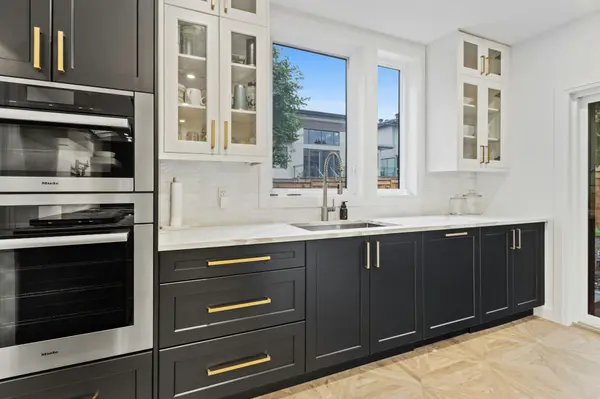
Sometimes the better strategy is a kitchen refresh.
That might include:
-
New cabinet hardware
-
Updated lighting
-
Fresh paint
-
New backsplash
-
Updated countertops when appropriate
-
Refinished or painted cabinets
-
Replacing a visibly dated appliance
The question isn't:
"How do I create my dream kitchen?"
It's:
"What changes would make this kitchen feel current to today's buyer?"
Those are two very different budgets.
4. Bathrooms Matter But Be Careful
Bathrooms are another area where homeowners can quickly overspend.
If your bathroom is functional but dated, you may not need a $40,000 renovation.
A smaller refresh can sometimes accomplish most of what you need:
-
New lighting
-
Updated faucets
-
New mirrors
-
Fresh paint
-
Updated hardware
-
New shower glass
-
Regrouting or repairing worn tile
However, if there's water damage, plumbing trouble or a bathroom that is significantly below the standard of comparable homes in your neighborhood, that's a different conversation.
5. Flooring Can Change the Entire House
Buyers notice flooring immediately.
Worn carpet, damaged hardwood or several different flooring styles throughout a home can make the property feel more dated than it actually is.
But don't automatically replace everything.
Sometimes hardwood can be refinished.
Sometimes carpet simply needs professional cleaning.
Sometimes replacing flooring in a few important rooms is enough.
Before spending thousands, determine what buyers in your particular neighborhood and price range expect.
A $700,000 Centennial home and a $2 million Greenwood Village home aren't necessarily competing against the same buyer expectations.
6. Fix the Things Buyers Will Think Are Problems
This category isn't nearly as exciting as a new kitchen.
But it's important.
A buyer walking through your house notices things like:
-
A dripping faucet
-
Peeling paint
-
Damaged trim
-
Broken switches
-
Cracked windows
-
Loose railings
-
Doors that don't close properly
-
Deferred exterior maintenance
Individually, these may be small.
Together, they create a much bigger concern:
"What else hasn't been maintained?"
That's why taking care of obvious deferred maintenance can sometimes be more valuable than adding something new.
7. Don't Forget the Yard
This is particularly important in neighborhoods with mature landscaping throughout Centennial and Greenwood Village.
You don't need to redesign the entire yard.
Start with:
-
Trimming shrubs and trees
-
Removing dead plants
-
Fresh mulch
-
Cleaning up edging
-
Improving the lawn
-
Power washing patios and walkways
-
Making the front entrance inviting
A well-maintained yard helps establish the condition of the home before a buyer ever walks inside.
What Would I NOT Automatically Do?
Before selling, I'd be very cautious about automatically spending heavily on:
-
A complete luxury kitchen remodel
-
A high-end primary bathroom
-
Highly personalized finishes
-
Expensive smart-home technology
-
A major addition
-
Converting bedrooms to another use
-
Improvements far beyond the standard of surrounding homes
These projects may be wonderful if you're staying and want to enjoy them.
That's different from doing them because you expect to recover every dollar when you sell.
The Question I Want Homeowners to Ask
Before starting any renovation, ask:
Am I doing this for my enjoyment or for resale?
If you're staying for another ten years, enjoyment matters tremendously.
Build the kitchen you've always wanted.
Create the outdoor space you'll actually use.
Make your home work better for your life.
But if you think you may sell in the next year or two, the strategy changes.
Before spending $25,000, $50,000 or $100,000, find out:
-
What your home is worth today.
-
What it could realistically be worth after the improvements.
-
What competing homes already offer.
-
Whether buyers in your neighborhood expect the improvement.
-
Whether there's a less expensive way to accomplish the same goal.
Sometimes renovating is absolutely the right decision.
Sometimes doing a handful of smaller projects is smarter.
And occasionally?
The best renovation before selling is the one you don't do.
Before You Start the Project
If you're considering improvements to a home in Centennial, Greenwood Village, Lone Tree or the surrounding South Denver Metro, I'm happy to walk through the property with you before you start spending money.
Not because you necessarily need to sell.
You may decide to stay.
But knowing what your home is worth and which improvements are likely to matter can help you make a much better decision about where to put your money.
Stay. Renovate. Move. The right answer starts with understanding your options.
Devin @ The W Real Estate Group
Categories
Recent Posts





GET MORE INFORMATION