
Where Should I Downsize in South Denver? Ranches, Patio Homes, Condos & 55+ Communities
So you've done the soul-searching.
You've run the numbers.
You've figured out what to do with the stuff.
Now comes the fun question.
Where do you actually go?
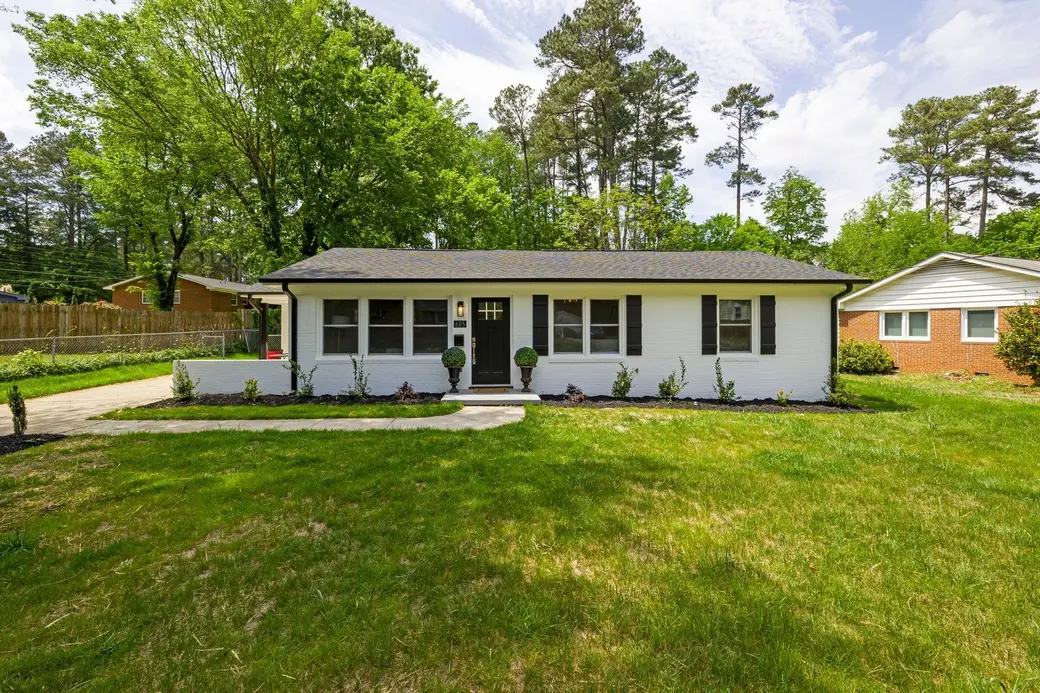
A one-level ranch in a neighborhood you already know?
A patio home where somebody else shovels the driveway?
A condo you can lock and leave for a month in Arizona?
A 55+ community with a clubhouse and a pickleball league?
There's no single right answer.
But there is a right answer for you.
Here's how I'd think through where to downsize in South Denver with homeowners in Centennial, Greenwood Village, Lone Tree, Littleton, Highlands Ranch and throughout the metro.
The Short Answer
Start with how you want to live, not the label on the listing.
Want to own your own lot, no shared walls, maybe a small yard? Look at ranches.
Want one-level living but done with mowing and snow? Look at patio homes.
Want the lowest maintenance and the most lock-and-leave? Look at condos and townhomes.
Want built-in community and neighbors in the same stage of life? Look at 55+ communities.
Then narrow by area: how close you want to be to family, your doctors, your church, your golf course, the light rail or the grandkids.
And before you fall in love with anything that has an HOA, read the HOA's numbers.
That last part matters more in 2026 than it used to. I'll explain why below.
First, What's the Denver Market Doing?
According to the Denver Metro Association of Realtors' September 2026 report:
- There were 13,567 active listings, or 4.76 months of inventory
- The median close price for detached homes was $635,000
- The median close price for condos and townhomes was $365,500, down 6.28% from a year earlier
- Condos and townhomes had even more supply: 7.21 months of inventory
DMAR said that much inventory gives buyers more selection and room to negotiate.
What does that mean if you're right-sizing?
When you buy: you have more choices than you've had in years, especially on the attached side.
When you sell: price it right and prep it right. Buyers have options too.
Those are metro-wide medians. They won't tell you what a one-level home in your favorite Centennial or Highlands Ranch neighborhood costs. That's a neighborhood-by-neighborhood conversation.
If you haven't run the money side yet, start with whether downsizing actually saves money.
Option 1: The Ranch
A ranch is the classic right-sizing move.
Everything you need on one floor.
No stairs to the primary bedroom.
Your own lot. Your own rules (mostly).
Why people love it
- One-level living now, and an easier home to stay in later
- No shared walls
- A yard you can keep big or shrink down
- Often no HOA, or a light one
The trade-offs
- You're still responsible for the roof, the exterior, the lawn and the snow
- Ranches are popular with downsizers and young families, so the good ones get attention
- In established neighborhoods, you may be buying an older home and budgeting for updates
Where to look
Think established neighborhoods.
Southglenn in Centennial, for example, was built in the 1960s, an era when one-level plans were common.
In the Town of Columbine Valley, next to Littleton, the original "Old Town" homes around the golf course are limited to one-story, ranch-style homes, according to the town's master plan.
Newer construction offers ranches too. Some new master-planned communities in the south metro sell single-family ranch plans right alongside two-story homes.
Watch for: "ranch with a finished basement" is great for guests, but if the laundry is downstairs, you haven't really escaped the stairs. Ask where the washer and dryer live.
Option 2: The Patio Home
"Patio home" isn't a legal category.
It's a style.
Usually it means a mostly single-level home, detached or paired, on a smaller lot, where an HOA handles the yard, the snow and sometimes the exterior.
Think ranch living, minus the mower.
Why people love it
- One-level living with far less upkeep
- Your own front door and garage, often no one above or below you
- Lock-and-leave freedom for travel
The trade-offs
- Smaller lots and less privacy than a traditional ranch
- An HOA, with dues, rules and architectural approvals
- What the HOA covers varies a lot. Some cover just landscaping and snow. Some cover roofs and exterior paint. Read the declaration.
Where to look
You'll find patio-style homes all over the south metro, and the trend is real.
Columbine Valley's master plan describes it in plain terms: its subdivisions built since the early 2000s moved toward smaller lots with mostly single-story, ranch-style homes, with HOAs responsible for yard maintenance. The plan calls that attractive to homeowners who don't want landscape duty, or who are "snowbirds."
You'll also see patio homes inside 55+ communities, which I'll get to in a minute.
Watch for: "snow removal" can mean the street and the driveway, or it can mean the street only. Ask what triggers it and what's included.
Option 3: Condos and Townhomes
If you want the least to take care of, this is usually it.
And right now, it's also where buyers have the most room to negotiate.
Why people love it
- Lowest maintenance. The HOA typically handles more of the exterior.
- Easier to lock and leave
- Lower median prices than detached homes in metro Denver
- Often closer to shopping, restaurants and transit
The trade-offs
- Shared walls, and with condos, possibly neighbors above or below
- Many townhomes have stairs. That's the opposite of one-level living.
- HOA dues, rules and the HOA's finances become your finances
The insurance and HOA piece
Here's why I said the HOA numbers matter more in 2026.
The Denver Gazette reported that attached homes and condos have "struggled for two years" to hold their prices against rising insurance and association fees.
And a study done for the Colorado Division of Insurance (required by HB24-1108) found HOA property insurance premiums in Colorado rose about 115% from 2020 to 2024.
That doesn't mean every condo is a bad buy.
It means you have to look under the hood.
Before you write an offer, I'd want to see:
- The current budget and what the dues actually cover
- The reserve balance and the most recent reserve study (if there is one)
- The master insurance policy and deductible
- Any special assessments, past or planned
- The last year of board meeting minutes
One more thing worth knowing: per Colorado's Division of Real Estate, the state's common-interest community law (CCIOA) doesn't require a reserve study. Many associations have one. Some don't. Ask.
Where to look
Lone Tree: In the RidgeGate area east of I-25, Lyric at RidgeGate offers condos, rowhomes, townhomes and single-family homes, including ranch styles, with direct access to the RidgeGate Parkway light rail station, per the community's site. The City of Lone Tree approved one project there with 190 condos and 80 townhomes.
Greenwood Village: If light rail matters to you, the city has two Southeast Line stations, Orchard and Arapahoe at Village Center. That's a natural starting point for a condo or townhome search near the Tech Center.
Watch for: an elevator building is a must if you're choosing a condo partly to avoid stairs. And ask about parking. Two cars and one assigned space is a daily headache.
Option 4: 55+ Communities
This is often the option people are most curious about.
And the most confused about.
What "55+" actually means
Under federal fair housing rules, a community can qualify as housing for older persons if at least 80% of its occupied units have at least one person 55 or older (24 CFR § 100.305).
That leaves room for the other 20%, and each community sets its own rules.
Heritage Eagle Bend in Aurora, for example, describes itself as a 55+ and 45+ age-restricted community, with no one under 19 permitted to live there.
Then there's age-targeted.
Those communities are designed for empty nesters but don't restrict who can buy. Reverie at Looking Glass in Parker, for instance, was repositioned in 2026 from a formally age-restricted community to a "Resort Lifestyle" community, according to its builder.
Neither is better.
But it matters if you want neighbors in the same season of life, or if you want the widest pool of buyers when you sell someday.
And 55+ isn't the same as senior living
A 55+ community is regular homeownership with an age rule.
A retirement or life-plan community, like Holly Creek in Centennial, is different: independent-living apartments and cottages with dining, services and access to higher levels of care on the same campus.
Different budget. Different decision. Different post.
Why people love 55+
- Neighbors at a similar stage of life
- Clubhouses, pools, classes, clubs and events built in
- Often low-maintenance homes, many with main-floor living
The trade-offs
- HOA dues (sometimes a master association plus a sub-association)
- Age rules affect who can live with you, and who can buy from you later
- Location: there aren't many deed-restricted 55+ options in the close-in south metro
Verified 55+ options in and near South Denver
Here are communities I could verify as age-restricted. Always confirm the current rules, HOA costs and what's included with the community before you tour.
Highlands Ranch - Verona: a 55-and-older community of condos (the Manors) and larger attached villas along the High Line Canal in west Highlands Ranch. (A newer, separate townhome section nearby is not age-restricted, so confirm which part of Verona a listing is in.) - Gleneagles Village: an established, gated 55+ community along The Links golf course in the Eastridge area, with attached and single-family homes and an HOA that handles exterior items like lawn care, snow removal and roofs.
Castle Rock - Hillside at Castle Rock: a 55+ active-adult patio-home community of single-level paired and detached homes. The builder includes landscape maintenance and snow removal and advertises pricing from the low $600,000s (as of October 2026). - Regency at Montaine: a 55+ active-adult, resort-style community of single-family homes with an amenity center and trails. The builder lists collections priced from $649,995 (as of October 2026).
Southeast Aurora - Heritage Eagle Bend: a fully built-out, age-restricted golf community with single-family homes, duplexes and townhomes, a clubhouse, pools and courts.
Want to rent first? - Aspendale Littleton is a 55+ active-adult apartment community that was set to open in summer 2026, per its operator. Renting for a year can be a smart way to test-drive a lifestyle before you buy.
New-construction prices change constantly. Treat any builder price as a starting point, not a quote.
A Quick Area Guide
Every city in the South Denver Metro has a different flavor. A few quick snapshots:
Centennial: established neighborhoods like Southglenn and a central spot between the Tech Center, Littleton and Highlands Ranch.
Greenwood Village: close to the Tech Center and two light rail stations; good for condo and townhome searches.
Lone Tree: newer RidgeGate neighborhoods with condos, townhomes and ranch plans near light rail.
Littleton: a historic downtown, established neighborhoods and the Columbine Valley pocket with its one-story Old Town.
Highlands Ranch: the Highlands Ranch Community Association runs four recreation centers, and residents enjoy about 70 miles of trails plus the 8,200-acre Backcountry Wilderness Area. It also has the two most established 55+ communities on this list.
A little farther out: Castle Rock and southeast Aurora have more new 55+ construction, in exchange for a longer drive to the city.
If you're house hunting from scratch, my free Buyer's Guide covers the buying side.
Ranch vs. Patio Home vs. Condo vs. 55+ at a Glance
| Ranch | Patio home | Condo / townhome | 55+ community | |
|---|---|---|---|---|
| One-level living | Usually | Usually | Condo yes (with elevator); townhome often no | Often |
| Yard and snow | You | HOA (usually) | HOA | HOA (usually) |
| Roof and exterior | You | Depends on HOA | HOA (usually) | Depends on HOA |
| Shared walls | No | Sometimes (paired) | Yes | Depends |
| HOA | None or light | Yes | Yes | Yes, sometimes two |
| Lock and leave | Harder | Easier | Easiest | Easier |
| Built-in social life | No | Some | Some | Yes |
| Who can buy from you later | Anyone | Anyone | Anyone | Age rules apply |
Questions to Ask Before You Pick
Before you choose a type, answer these honestly:
- Can I do stairs in 10 years? If you're not sure, plan for main-floor living now.
- Do I still want a yard, or just a patio and a few pots?
- How often will I travel? The more you're gone, the more lock-and-leave matters.
- Who do I want nearby? Family, doctors, friends, church, the golf course.
- Will grandkids or adult kids stay with me? That affects bedrooms, and in a 55+ community, the rules.
- What's my all-in monthly budget? Mortgage (if any), taxes, insurance and HOA dues.
If you're still on the fence about moving at all, Should I Downsize or Age in Place? walks through that decision. And the 10 signs it might be time is a good gut check.
If you've already found the place and need to sort out the timing, here's how to decide whether to buy before you sell.
And if staying put with a few smart projects still sounds better, here's what home improvements actually add value.
A Few Tips That Make the Search Easier
Tour on a weekday and a weekend. A clubhouse feels different on a Tuesday morning than a Saturday night.
Measure your must-keep furniture first. I covered what to keep, sell and donate in What Do I Do With 30 Years of Stuff Before Downsizing?
Ask for the HOA documents early. The budget, reserves, insurance and minutes tell you more than the brochure.
Ask about property taxes, not just dues. Newer communities can carry different tax pictures than established neighborhoods. Compare the actual tax bills.
Think about resale. Someday you or your family may sell this home. A smaller buyer pool (like age-restricted) isn't a deal-breaker, but price it into the decision.
Don't forget your current home. What it nets you shapes everything above. I'm happy to run that number.
And if the bigger question is still stay, renovate or move, start with Should I Stay, Renovate or Move?
Free: Fall 2026 South Denver Seller's Guide
Thinking about right-sizing in the next year or two? My free Fall 2026 Seller's Guide walks through prep, pricing, timing and what to expect in today's market.
Wondering how much home your current home could buy? Ask me for a free home value and net proceeds sheet. No pressure, no sign in the yard. Call or text 720-935-7537.
Frequently Asked Questions
Where should I downsize in South Denver?
It depends on how you want to live. Ranches suit people who want their own lot and no shared walls. Patio homes offer one-level living with less upkeep. Condos and townhomes are the most lock-and-leave. 55+ communities add built-in community. Then narrow by area: Centennial, Greenwood Village, Lone Tree, Littleton or Highlands Ranch.
What's the difference between a patio home and a townhome?
"Patio home" isn't a legal term. It usually means a mostly single-level home, detached or paired, on a small lot, where an HOA handles the yard and snow. A townhome shares walls and often has stairs. Listings are labeled by the seller, so check the floor plan and the HOA declaration.
What does "55+ community" mean in Colorado?
Under federal fair housing rules, a community can qualify as housing for older persons if at least 80% of occupied units have at least one resident 55 or older. Each community sets its own rules for the rest. Some allow younger buyers; age-targeted communities have no age restriction at all. Always confirm before you buy.
Are there 55+ communities in Highlands Ranch?
Yes. Verona, along the High Line Canal, and Gleneagles Village, a gated community along The Links golf course, are established age-restricted communities in Highlands Ranch. Farther south, Castle Rock has newer 55+ options like Hillside at Castle Rock and Regency at Montaine. Confirm current rules, HOA costs and inclusions with each community.
What should I check before buying a condo or patio home with an HOA?
Get the budget, reserve balance and any reserve study, the master insurance policy and deductible, the minutes and any special assessments. A state study found Colorado HOA insurance premiums rose about 115% from 2020 to 2024, and Colorado law doesn't require a reserve study, so the documents matter.
The Right-Sizing Series: South Denver Downsizing Guide (all 6 posts)
- Should I Downsize My Home? 10 Signs It Might Be Time
- Should I Downsize or Age in Place?
- Does Downsizing Actually Save Money?
- Should I Buy My Smaller Home Before Selling?
- What Do I Do With 30 Years of Stuff?
- Where Should I Downsize in South Denver? (you're reading it)
Let's Find Your Right-Sized Place
If you're in Centennial, Greenwood Village, Lone Tree, Littleton, Highlands Ranch or anywhere in the South Denver Metro, I'm happy to walk through it with you.
Which neighborhoods fit how you live.
Which HOAs I'd want to see the numbers on.
What your current home could net to get you there.
You don't need to be ready to move.
You just need a starting point.
The right next home isn't smaller. It's simpler.
Stay. Renovate. Move.
Devin @ The W Real Estate Group
This article is for general information only and isn't legal, tax, insurance or financial advice. Community details, age rules, HOA coverage and builder pricing change. Confirm everything directly with each community, HOA and builder before you buy. Market figures are from the sources below as of October 2026 and will change. Community names are listed for information only; no endorsement or affiliation is implied.
Sources
- Denver Metro Association of Realtors, Market Trends Report, September 2026 (released Oct. 3, 2026), via Denver Agent Magazine, Oct. 7, 2026 and The Denver Gazette, Oct. 6, 2026
- Colorado Division of Insurance, HB24-1108 Final Report: Analysis of HOA & Lodging insurance (released Jan. 2026), as summarized by HOA Weekly, Sept. 10, 2026; see also Colorado Division of Real Estate bulletin, Feb. 2026
- Colorado Division of Real Estate, HOA Finances (CCIOA budget process, special assessments, reserve studies)
- 24 CFR § 100.305, 80 percent occupancy (Housing for Older Persons)
- Town of Columbine Valley, 2020 Master Plan (Old Town one-story ranch homes; newer small-lot, mostly single-story subdivisions with HOA yard maintenance)
- Newsletter Connections, Southglenn (Centennial; homes built in the 1960s)
- Lyric at RidgeGate, FAQs; City of Lone Tree, Lokal Homes – Lyric Condominiums & Townhomes
- City of Greenwood Village, Regional Transportation (Orchard and Arapahoe at Village Center light rail stations)
- Highlands Ranch Community Association, About Highlands Ranch
- Verona: The Denver Post, June 14, 2012; 55places, Verona; US55Living, Verona
- Gleneagles Village: 55places, Gleneagles Village; US55Living, Gleneagles Village
- BLVD Builders, Hillside at Castle Rock
- Toll Brothers, Regency at Montaine
- Heritage Eagle Bend Golf Club, Realtors & Prospective Residents
- Dream Finders Homes via PR Newswire, Reverie Resort Lifestyle… Evolves to Meet Changing Buyer Preferences (Aug. 18, 2026)
- Holly Creek Retirement Community, Independent Living
- Greystar, Aspendale Littleton
Categories
Recent Posts





GET MORE INFORMATION